Our Establishment Story
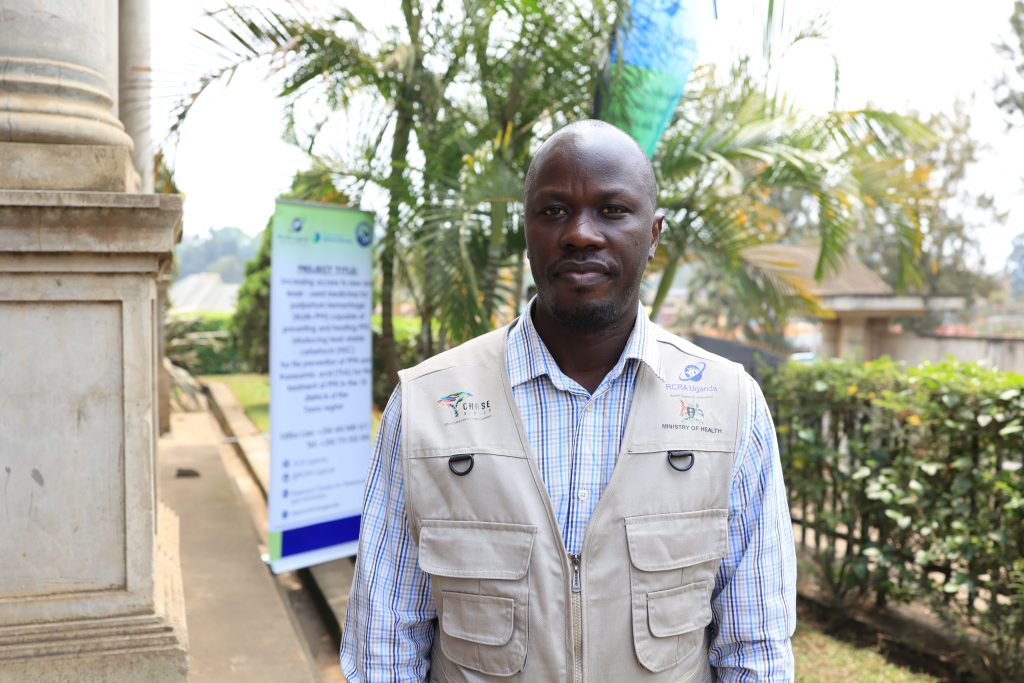
Rwenzori Center for Research and Advocacy (RCRA) was fully registered under the laws of Uganda in 2014. An interview with Mr. Jostas Mwebembezi (Statistician), Founder. How did you start RCRA? I founded RCRA in 2014. I was involved in data collection to update the municipality's statistical abstract. While speaking with a pregnant mother and a mother of a newborn, I asked the pregnant mother whether she knew her expected date of delivery (EDD) and whether she had made a childbirth plan. She replied no. I asked whether she could remember her last menstrual period (LMP). She said yes. I also asked the newborn's mother whether the child was fully immunized, whether she sought health center services whenever the child was sick, and whether she knew the best child-feeding practices, including breastfeeding and eating vegetables. She replied no.
By that time, I had no experience running an organization, but using my mathematical knowledge, I knew I could use LMP to calculate EDD for every pregnant mother. Once I had generated the EDD, I could create a schedule showing which trimester each pregnant mother falls into. Then, using the Ministry of Health's essential maternal and neonatal healthcare guidelines, I would generate information tailored to each trimester, including dos and don’ts during pregnancy. During home visits, I would assist pregnant mothers in making a birth plan for either a normal birth or a C-section, while attending the antenatal and in consultation with the clinician on the health status of the unborn baby. Similarly, the mother of a newborn would receive assistance with feeding advice and a menu to support better child growth outcomes. I visited the Director of the Fort Portal Regional Referral Hospital, by then Dr. Olaro Charles, and Dr. Obeti Richard, by then at the District Health Office Kabarole, and Dr. Richard Mugahi (who later provided the first office space for RCRA) to validate my idea of empowering pregnant mothers and mothers of newborns to prevent all preventable maternal deaths and child mortality in our community, which I read in the District Statistical Abstract 2010. I remember asking the doctors, “Why are women dying from preventable maternal deaths? Why can’t children celebrate their first or fifth birth anniversaries?” They said mothers lack vital information, and others use traditional birth attendants (TBAs). I was so concerned. If vital health care information exists, it should be delivered to the community because if people are informed, they would strive to be healthier and escape preventable health challenges.
I started as a peer educator, helping pregnant women understand their trimester and develop a birth plan, creating a household action plan, and educating them on the dos and don’ts during pregnancy. I also encouraged them to seek health center and clinician advice, eat well, avoid and manage stress, attend all 4 antenatal visits, and deliver at the health facility with a skilled midwife. I educated the mothers of newborns about the benefits of breastfeeding, completing immunizations, and seeking care from a trained provider when their newborn is sick. Although I had no experience running the organization, people listened to me and followed what I taught them, which motivated me to continue the mission. I found resourceful volunteers in the community and later recruited the Village Health Teams as volunteers for home-based health education. They identified pregnancy danger signs and malnutrition, made several referrals to the health facility, and tracked all referrals to ensure those referred had received the service they were referred for.
In July 2014, RCRA was fully registered and incorporated under Ugandan law as a nonprofit organization by a group of health professionals, including medical doctors, social scientists, biostatisticians, and public health leaders.
In 2019, I led a highly successful integrated family planning mobile day clinic at Kasangali Primary School in Kasese, where I witnessed people leaving with illnesses in marginalized rural communities. I continued outreach work, working closely with the District Ministry of Health, and now deliver 24 annual mobile outreach day clinics offering a full range of Family Planning treatments, antenatal care, immunization, child deworming, cervical cancer screening, Hep B testing, malaria testing and treatment, HIV testing and counseling, referrals, and general doctor consultations.
In 2020, RCRA registered with the United States in the state of Ohio and was granted 501(c)(3) foreign public charity status by the Internal Revenue Service (IRS) as a tax-exempt organization. EIN 98-1511659.
In 2021, I started the not-for-profit Community Health Centre III and Adolescent Recreation Centre in Rugendabara after the community and outreach clinic attendants demanded a place where they could find us if they wanted our health care services.
Today, RCRA is the leading provider of community maternal and child healthcare in the Rwenzori region.